
There’s No Such Thing as “Biological Pronouns”
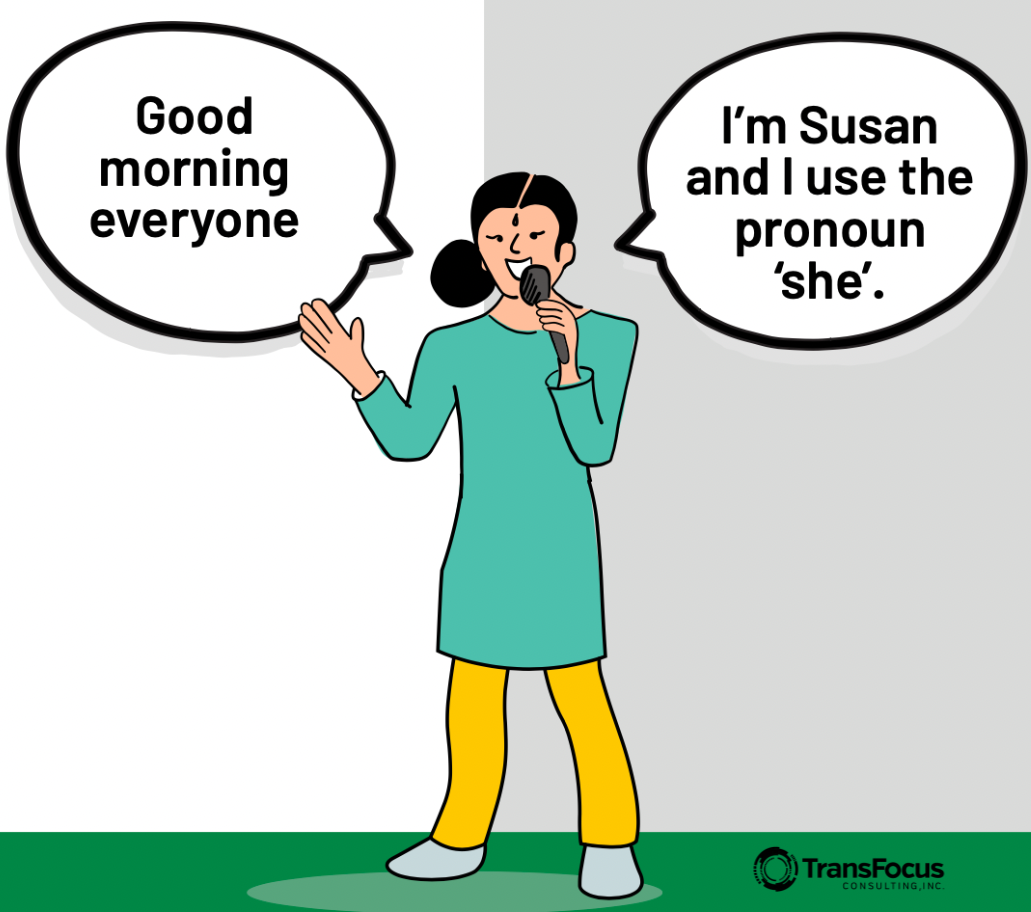
Most of us are probably familiar with the conversations about pronouns these days. Whether it's deciding whether or not to share them, figuring out the language around the term “preferred” pronouns or navigating unfamiliar ones, pronouns are showing up in all kinds of discussions. More recently, a new phrase has been appearing in some settings - “biological pronouns.”
In a recent U.S. court case, it was argued that students had a constitutional right to refer to trans classmates by their “biological pronouns,” effectively giving the act of misgendering more legal protection than the rights of the trans students themselves. It treats a trans person’s own understanding of their gender as less valid than everyone else’s assumptions about their body when, in reality, no one knows a person’s gender better than the person themselves. Beyond the harm this directly causes, there’s another issue - “biological pronouns” don’t exist.
It sounds official, even scientific, so it’s easy to see why some people may not immediately question it. But ultimately, it doesn’t describe anything meaningful, and the phrase falls apart the moment you try to apply it.
Pronouns are language. Biology is, well, biology. One is about how we talk about ourselves and others; the other is about the bodies we’re born with - our chromosomes, hormones and sex characteristics, among other things. Gender, by contrast, is our internal sense of who we are, defined by ourselves, not by our bodies (although for many, they can be interlinked). No one is born with pronouns stamped on their birth certificate. There’s no “he/him” gene or “she/her” chromosome hiding in our DNA.
If we try to apply the idea of “biological pronouns” in practice, it quickly becomes clear how unworkable it is. Determining someone’s pronouns based on biology could entail an invasion of privacy (e.g., showing DNA results or birth certificate) before deciding which pronouns to use. Beyond being exceptionally invasive and deeply impractical, this approach would create serious harm. It would erode trust, increase conflict, and put people’s physical and psychological safety at risk in workplaces, schools, and public spaces. It could also open the door to potential legal consequences.
Even within biology, the reality is much more complex than a simple binary. Intersex traits, multiple chromosome combinations and hormone variations show that biology doesn’t, and never has, divided neatly into two categories. In fact, the more we learn about the body, the clearer it becomes that variation is the rule, not the exception.
Ultimately, this is a classic example of rhetorical sleight-of-hand. The phrase “biological pronouns” is designed to sound scientific and objective, even though pronouns are social and linguistic, not biological. By borrowing the language of science, the phrase makes a personal truth - someone’s gender identity - seem like something that can be measured or proven from the outside. That’s the trick - the phrase “biological pronouns” is not meant to describe reality, it’s meant to persuade. Over time, the wording spreads, and people repeat it without realizing they’re echoing a linguistic shortcut designed to give ideology the appearance of fact. Saying “I use their biological pronouns” sounds almost principled, like you’re defending science itself, rather than just being rude.
So, how do we avoid falling into this trap? It starts with noticing the language we use and what it signals… and it includes gently guiding others, too. If you hear someone using the phrase “biological pronouns,” you can redirect them in a private conversation or share this blog as a resource to explain why it’s misleading. In doing so, we’re not just correcting words; we’re refusing to let harmful myths take root.
It’s clear that “biological pronouns” aren’t a real or meaningful concept, but they are a distraction from what actually matters - treating others with dignity and respect. Using someone’s pronouns isn’t a question of biology; it’s a simple, essential part of maintaining that respect.
Humans shouldn’t be reduced down to anatomy and identity cannot be measured solely in chromosomes or hormones. Gender is expansive, fluid and defined only by the person who lives it. Honouring someone’s pronouns is about recognizing that self-knowledge and allowing their full humanity to exist.